Oct. 12, 2026
News
What Size Beer Brewing System Do You Actually Need? A Practical Method for Choosing Capacity Without Guesswork
The Question Behind Every Equipment Decision
Every equipment decision flows from one number: how much beer do you need to produce each week. Get that number right and everything else follows. Get it wrong and you either buy equipment you cannot fill or equipment that cannot keep up.
Most brewery projects get this wrong in one direction or the other. Here is how to calculate it properly.
Start With Sales, Not With Equipment
The brewhouse size is not the starting point. The starting point is how much beer you can sell. A taproom with twenty seats sells differently than a taproom with eighty seats. A brewery with distribution into fifty accounts sells differently than one with five.
Work out your weekly sales volume in liters or barrels. Include taproom sales, distribution, and any packaging you plan to do. Add twenty percent for growth and twenty percent for beer that does not make it to sale — spills, samples, quality holds, and shrinkage.
That number is your target production volume. Everything else is engineering.
Convert Sales Volume Into Batch Size
A brewery producing one thousand liters per week can run one batch of one thousand liters, two batches of five hundred liters, or five batches of two hundred liters. The batch size determines the brewhouse size. The number of batches determines the vessel configuration and the labor requirement.
A single brewer can manage one or two batches per day on a semi-automated system. Three or more batches per day requires either a second brewer or a higher level of automation. The labor cost is part of the equation, not separate from it.

The Fermenter Ratio
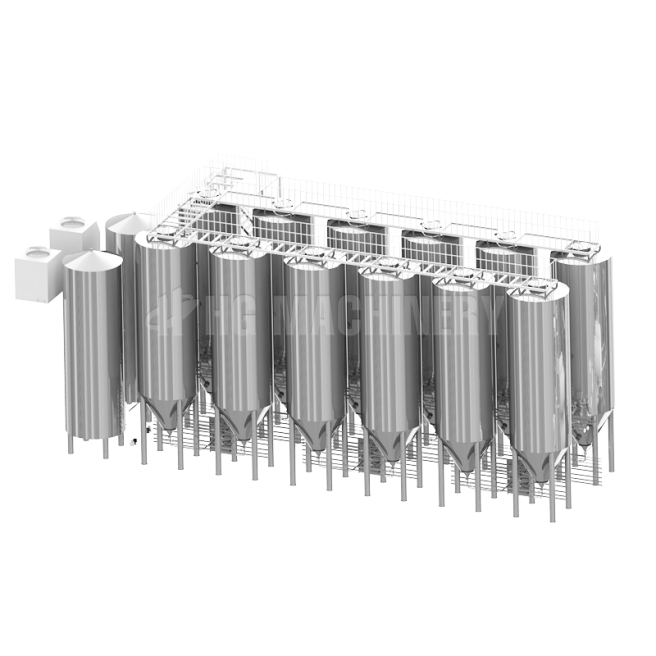
The rule of thumb is three to four times the brewhouse batch size in total fermentation capacity. A one-thousand-liter brewhouse needs three to four thousand liters of fermenter volume. That is four one-thousand-liter fermenters, or six five-hundred-liter fermenters, or some combination.
The ratio exists because fermentation takes time. An ale ferments in seven to fourteen days. A lager ferments in twenty-one to thirty days. If you brew once a week and your beer ferments for two weeks, you need at least two fermenters in rotation. If you brew twice a week, you need four. If you brew lagers, you need more.
The Cold Crash Problem
Cold crashing — dropping the fermenter temperature to near freezing to settle yeast and clarify the beer — adds time to the tank occupancy. A beer that ferments in seven days and cold crashes for three occupies the tank for ten days, not seven. That extra time is invisible in the fermentation schedule and visible in the tank count.
Breweries that cold crash every batch need thirty to forty percent more fermenter capacity than the standard ratio suggests.
The Packaging Constraint
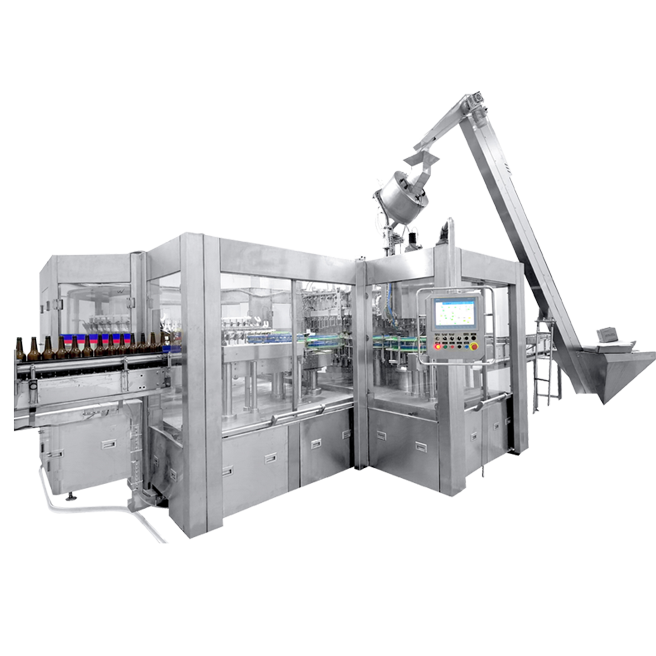
A brewhouse can only produce as much beer as the packaging line can handle. A brewery with a brewhouse capable of two thousand liters per week and a manual canning line capable of five hundred liters per week is a brewery producing five hundred liters per week. The brewhouse is not the constraint. The packaging is.
Size the packaging line alongside the brewhouse. If you plan to can, calculate the cans per hour the line can produce and the hours per week you are willing to run it. That number is your packaging ceiling. The brewhouse should not exceed it.
The Growth Question
A brewery that sizes its system for year-one sales will outgrow it in year two. The question is how to handle that growth without replacing the core equipment.
The answer is modularity. Choose a brewhouse that can add vessels. Choose a glycol system with spare capacity. Choose a control panel that can accept additional tanks. Run capped-off utility lines to empty floor space where future tanks will sit.
A brewery that plans for growth pays for growth when it happens. A brewery that does not plan for growth pays for a complete replacement instead.
Not sure what capacity your brewery actually needs? We calculate brewhouse size, fermenter count, and packaging capacity from your sales projections — not from a generic formula. Leave a message below with your target weekly sales and beer styles, and we will send you a complete capacity plan.